
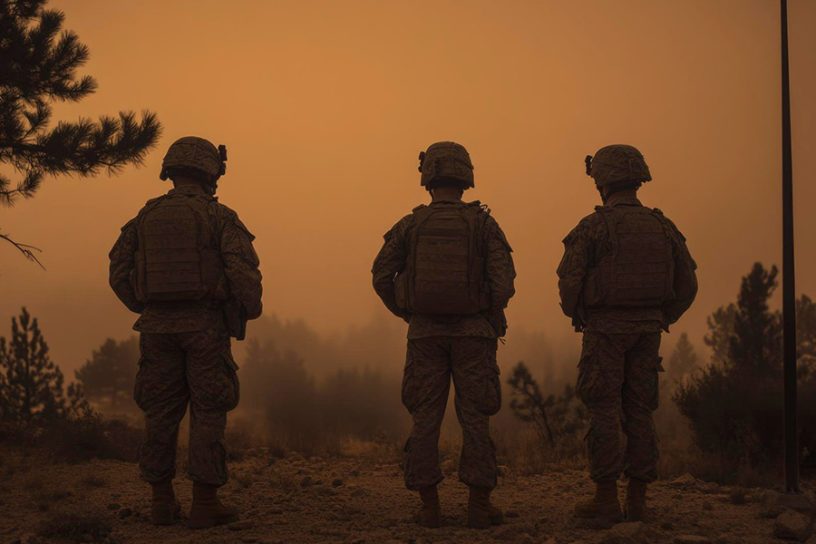

Enforcing child soldiering prohibitions remains ineffective despite multi-regime norms, requiring alignment between “law on paper” and “law in action”.
Authors
Obinna Nnanna Okereke, Faculty of Law, Prince Abubakar Audu University, Nigeria
Uche Nnawulezi, College of Law, Bowen University, Osun Stage, Iwo, Nigeria
Salim Bashir Magashi, Faculty of Law, Ahmadu Bello University, Nigeria
Kasim Balarabe, Professor, Jindal Global Law School, O.P. Jindal Global University, Sonipat, Haryana, India
Septhian Eka Adiyatma, Faculty of Law, Universitas Diponegoro, Semarang, Indonesia
Summary
The purpose of this paper is to examine the challenges of enforcing the international legal framework on child soldiering. The paper reveals that, as the offense of child soldiering escalates, the multi-dimensional scope for protecting child soldiers spans various legal regimes under international law. It argues that, despite several prohibitive norms established in International Humanitarian Law (IHL), International Human Rights Law (IHRL), the International Labour Organization (ILO), and International Criminal Law (ICL), their application or enforcement against child soldiering remains ineffective and inadequate due to numerous impediments and challenges. This is because “law on paper,” like a baby in the womb, must align with “law in action” to achieve adequate effectiveness. The methodology employed is doctrinal research. Major gaps were identified, and the paper provides comprehensive recommendations to enhance the enforcement of global treaties against child soldiering. The paper concludes with recommendations to address the technical and legal complexities associated with child soldiering.
Published in: Journal of Law and Legal Reform
To read the full article, please click here.
