
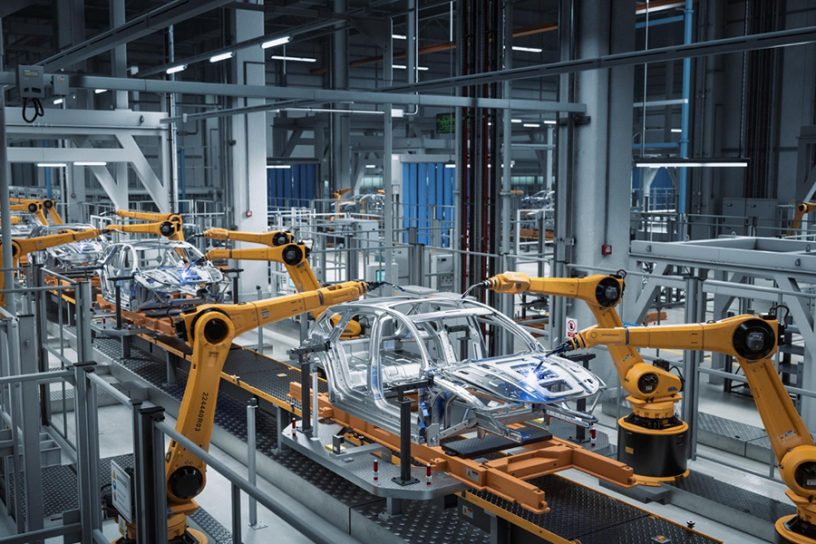

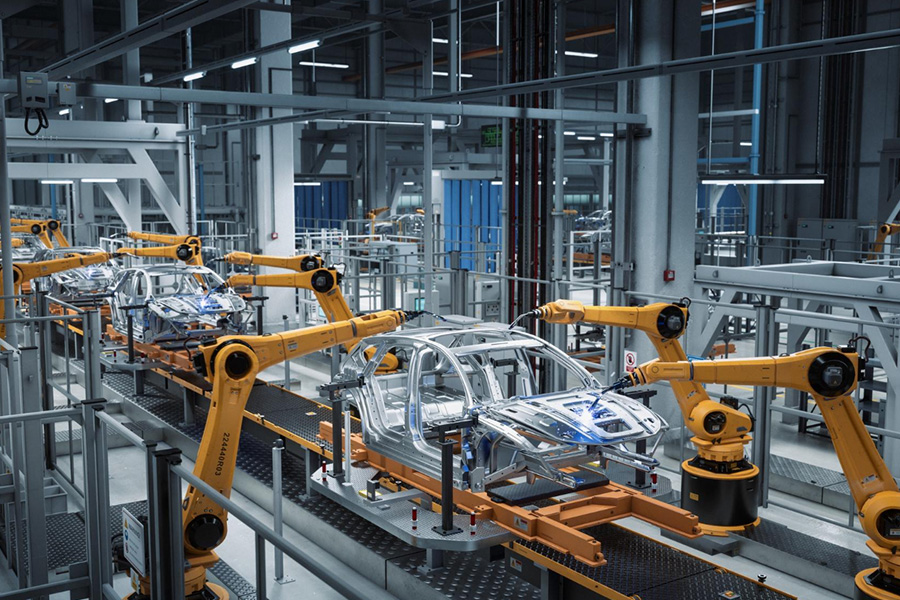
Deep learning techniques, like CNNs and RNNs, enhance real-time quality control in automated production lines, boosting efficiency and accuracy.
Authors
Satish Kumar Kalhotra, Department of Education, Rajiv Gandhi University, Arunachal Pradesh, India
Sunil Kr Pandey, Dept. of IT., Inst.of Technology & Science, UP, Ghaziabad, India
M Vijayasanthi, Dept. of ISE, CMRIT, Bengaluru, India
Subarno Bhattacharyya, Assistant Director, Office of D.L. and Online Edu, O.P. Jindal Global University, Sonipat, Haryana, India
Udit Mamodiya, Faculty of Engg. & Technology, Poornima University, Rajasthan, Jaipur, India
Kamesh Yadav, School of CS., Uttaranchal University, Uttarakhand, Dehradun, India
Summary
To maintain high standards and efficiency in the age of Industry 4.0, automated production lines must have real-time quality monitoring. Using deep learning techniques to improve real-time quality control systems is the focus of this essay. Various industrial settings employ state-of-the-art deep learning algorithms to discover flaws and problems. We provide a complete evaluation of these methods, including CNNs, RNNs, and GANs. Using a combination of experimental and case study methodologies, we show how these algorithms may be used in conjunction with current automation systems to make quality evaluation more efficient and accurate. Deep learning enhances production line efficiency via improved decision-making and enhanced issue detection accuracy, according to the results. In addition, we go over some of the obstacles and potential solutions for a widespread use of these technologies in the future.
Published in: 2024 International Conference on Augmented Reality, Intelligent Systems, and Industrial Automation, ARIIA 2024
To read the full article, please click here.
