
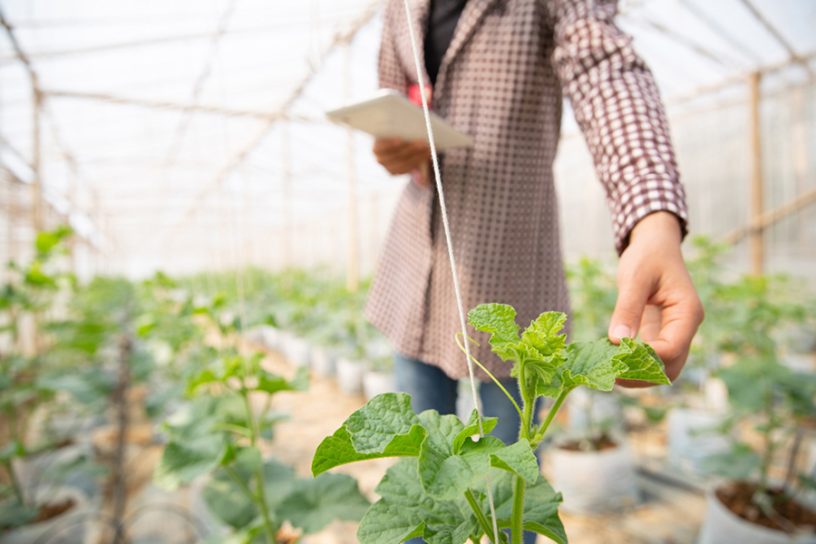


AI adoption in agri-food supply chains faces stakeholder-specific barriers requiring targeted efforts to enable effective implementation and food security.
Authors
Rajesh Kumar, Amity School of Business, Amity University Patna, Patna, India
Ashutosh Samadhiya, Assistant Professor, Jindal Global Business School, O.P. Jindal Global University, Sonipat, Haryana, India
Anil Kumar, Guildhall School of Business and Law, London Metropolitan University, London, United Kingdom
Sunil Luthra, All India Council for Technical Education, New Delhi, India
Asmae el Jaouhari, Systems Analysis and Modeling Laboratory and Decision Support, National School of Applied Sciences, Hassan First University, Berrechid, Morocco
Summary
Purpose: In agri-food supply chains (AFSCs), food waste can be minimized, and food security can be improved with the assistance of artificial intelligence (AI). But the implementation of AI in AFSC is difficult due to various barriers. Therefore, this paper aims to examine the barriers in the AFSC and explores how these challenges can be addressed using AI.
Design/methodology/approach: This article draws on academic research, business best practices and legislative frameworks to provide suggestions from a conceptual and qualitative perspective. This critical assessment takes into account the viewpoints of many stakeholders and examines the difficulties of using AI technology in AFSC.
Findings: Our findings reveal the various barriers, such as for producers (lack of expertise, initial cost, data privacy concerns), for food processors (regulatory compliance, legacy systems, quality control, regulations and standards), for distributors (logistical challenges, seasonal variability, sustainability concerns, regulatory compliance) and for consumers (limited access to information, quality and freshness, complexity of the supply chain and cost fluctuations).
Originality/value: This study does an in-depth analysis focusing on the application of AI or the challenges faced by it from the perspective of all major stakeholders involved in AFSC. Our study not only identifies these challenges, but it also recommends what efforts are necessary to mitigate these challenges.
Published in: International Journal of Industrial Engineering and Operations Management
To read the full article, please click here.
