
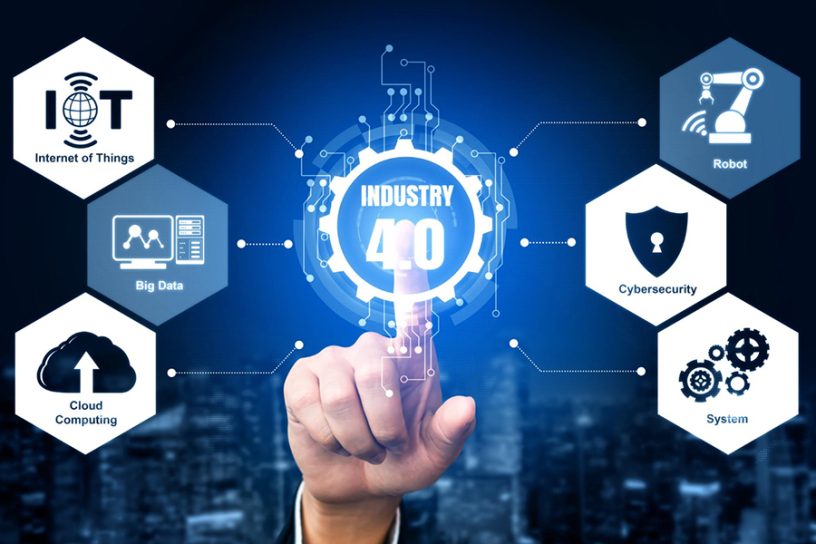


Adopting Industry 4.0 in pharmaceutical supply chains is hindered by challenges such as lack of product control, quality concerns, and time pressure, impacting circularity and sustainability.
Authors
Anchal Patil, IMI Delhi, New Delhi, India
Ashish Dwivedi, Professor, Jindal Global Business School, O.P. Jindal Global University, Sonipat, Haryana, India
Sanjoy Kumar Paul, UTS Business School, University of Technology Sydney, Sydney, Australia
Dindayal Agrawal, Institute of Management Technology, Ghaziabad, India
Summary
Pharmaceutical waste is a cause of concern for public health, environment, and economy. Pharmaceutical waste comprises expired, spoiled, and unused medicines and vaccines. Pharmaceutical supply chains (PSC) counter several complications in managing unsuitable medicines and pharmaceutical products. In this context, previous literature proposed a few applications of Industry 4.0 (I4.0) to resolve the hazardous impacts of PSC and facilitate circularity in PSC. However, PSC literature has rarely explored the application of I4.0 in the context of circularity. Thus, the current study identifies the challenges to circularity and I4.0 that facilitate circular business models (CBM) in PSC through literature reviews and experts’ opinions.
In total, 17 challenges were identified to facilitate circularity in PSC and they were modeled by adopting the Grey DEMATEL approach. Further, applying the maximum mean de-entropy (MMDE) algorithm helped compute the threshold value established on the information entropy of the inter-relations between the challenges to I4.0 in PSC. The results reflect that lack of control and limited monitoring of pharmaceutical products, quality and ethical concerns in pharmaceuticals, and time pressure are the most dominant challenges to I4.0 that facilitate CBM in PSC. The study findings suggest that pharmaceutical manufacturers redesign the manufacturing strategy and develop a product recovery system in PSC. The implications involve PSC stakeholders’ knowledge building for achieving sustainable performance. The study’s findings will help PSC practitioners create suitable action plans for adopting CBMs and I4.0 technologies.
Published in: Environment, Development and Sustainability
To read the full article, please click here.
