


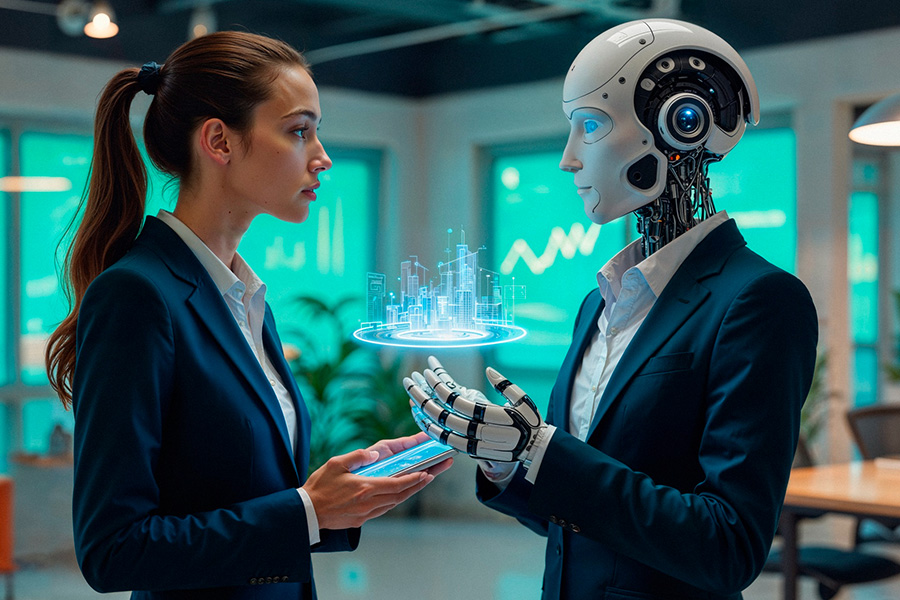
AI enhances employee well-being through engagement monitoring, stress detection, and wellness programs, but raises concerns about data privacy and trust.
Authors
Shivani Dhand, Lovely Professional University, India
Aayushi Pandey, Lovely Professional University, India
Sejal Mishra, Lovely Professional University, India
Kiran Sharma, Lovely Professional University, India
Ananya Kadanga, Lovely Professional University, India
Ankush Rawat, Lovely Professional University, India
Veena Kumari, Lovely Professional University, India
Mohit Yadav, Professor, Jindal Global Business School, O.P. Jindal Global University, Sonipat, Haryana, India
Badr-un-nisa Chand, University Cananda West, Canada
Summary
The whole world is rushing towards Artificial Intelligence; it has revamped every dimension of our lives. Now, various companies are utilizing AI to improve employee well-being. This chapter is an attempt to understand the role of AI in enhancing employee well-being at the workplace. It examines AI-driven solutions for monitoring employee engagement, stress levels, and overall job satisfaction. AI-powered tools, such as mental health chatbots, predictive burnout models, and personalized wellness programs, contribute significantly to workplace efficiency and employee retention. However, the integration of AI into well-being initiatives also raises ethical concerns regarding data privacy, algorithmic bias, and employee trust. This study emphasizes the need for a human-centered approach that balances AI automation with personal interaction. By ensuring transparency, regulatory compliance, and ethical implementation, organizations can successfully leverage AI to foster a healthier, more engaged, and productive workforce.
Published in: Global Work Arrangements and Outsourcing in the Age of AI
To read the full chapter, please click here.
